
Artificial intelligence is changing how people search for homes, discover real estate professionals, interpret market information and interact with businesses online. For real estate agents, understanding these changes is becoming an increasingly important part of staying informed, serving clients and building a successful business.
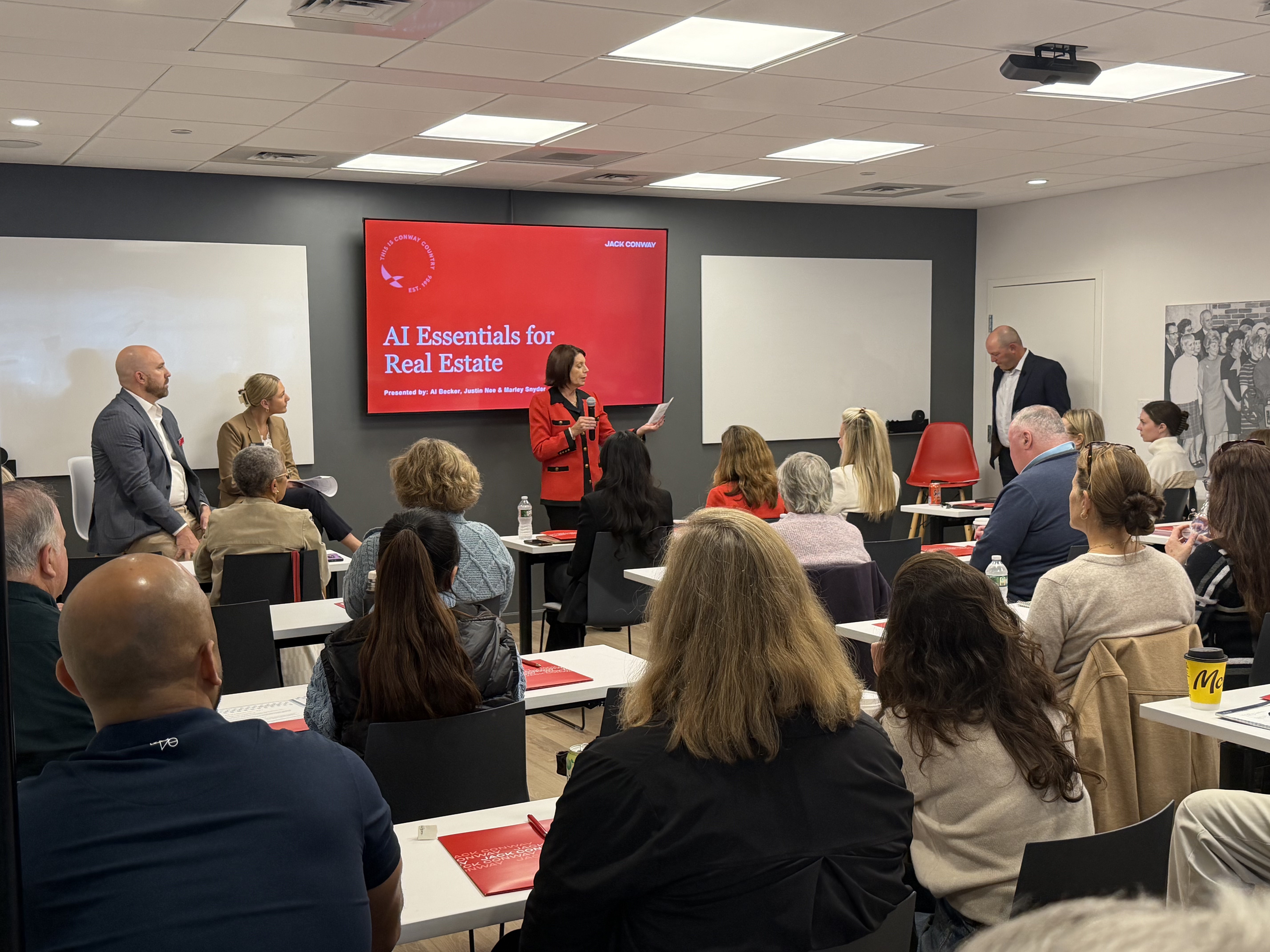
On Wednesday, October 21, more than 70 real estate professionals gathered at Jack Conway's Hanover, Massachusetts headquarters for AI Essentials for Real Estate Professionals, a continuing education course designed to make artificial intelligence more approachable, practical and relevant to everyday real estate work.
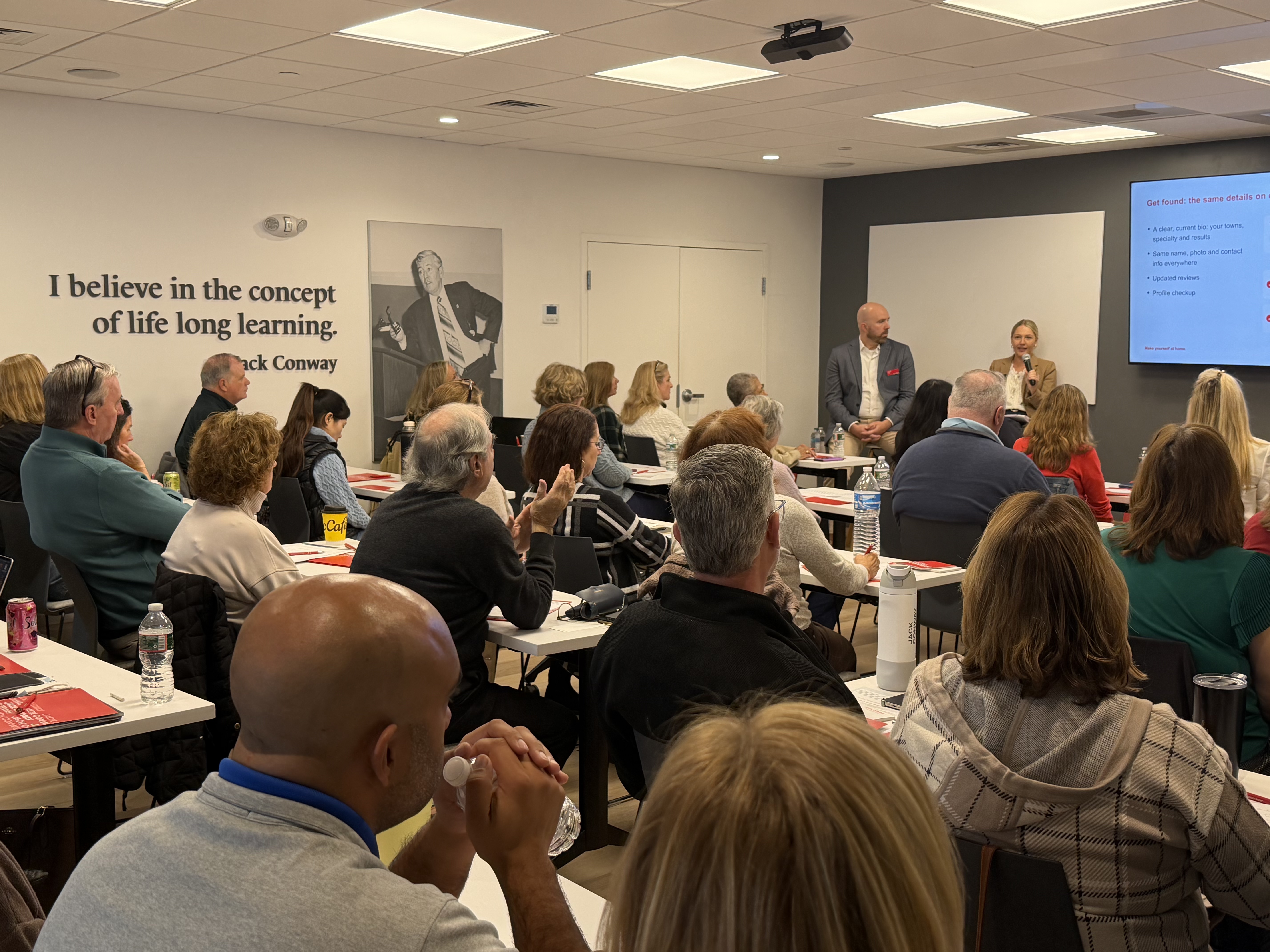
Presented as part of Jack Conway's Elevate Series, the afternoon combined professional education with conversation and networking in an event appropriately titled CE & Charcuterie. Agents from Jack Conway and other local brokerages joined the session, reflecting the growing interest in AI education throughout the Massachusetts real estate community.
Jack Conway President and Chief Operating Officer Al Becker, Jack Conway Hanover agent Justin Nee, and Social Media & Productivity Specialist Marley Snyder led the course, drawing on leadership experience, real-world agent applications and ongoing research into the technologies influencing real estate.
The afternoon covered far more than how to use a chatbot. Attendees explored how AI is influencing real estate search, marketing, client communication, property research and professional visibility, along with the responsibilities that come with incorporating these tools into a real estate business.
Artificial Intelligence Is Already Part of the Real Estate Experience
One of the first ideas introduced during the course was that artificial intelligence is not entirely new. Many of the technologies people use every day, including search engines, navigation systems, email suggestions and automated property valuations, have relied on forms of AI for years.
What has changed is the accessibility of increasingly sophisticated AI tools. Real estate professionals can now interact with these systems through everyday language, asking questions, organizing information, drafting content and exploring ideas without needing a technical background.
The presentation introduced several widely used AI platforms, including ChatGPT, Claude, Gemini and Microsoft Copilot, while discussing the different ways agents might incorporate them into their work.
Rather than encouraging agents to adopt every available platform, the course emphasized understanding what these tools can do, recognizing their limitations and identifying practical applications that make sense for an individual business.
That distinction matters. Technology alone does not create a better client experience. The value comes from how thoughtfully it is used, whether that means helping an agent organize information, communicate more clearly or devote more attention to the personal guidance clients expect.
How AI Is Changing Real Estate Search and Online Visibility
One of the afternoon's most relevant discussions focused on how artificial intelligence is changing the way consumers find information online.
Search engines are increasingly incorporating AI-generated responses into traditional search results, while conversational AI platforms allow users to research businesses, communities and real estate topics in new ways.
For real estate professionals, this creates an important connection between AI and digital visibility. An agent's online presence is no longer limited to whether a website appears in a familiar list of search results. The information available across professional profiles, brokerage websites, business listings and other digital sources can also influence how that agent is represented in AI-assisted discovery.
Marley explored these developments and the importance of maintaining accurate, consistent and informative professional information online.
For agents, a strong digital presence begins with the fundamentals: clear professional bios, accurate contact information, current business details and information that reflects their actual experience and areas of expertise.
The discussion also introduced Conway Bio Builder, a custom AI resource developed by Marley to support Jack Conway agents as they strengthen their professional presence across digital platforms.
As AI becomes more integrated into online discovery, Jack Conway continues to explore how emerging technology can support agents in communicating their experience and local market knowledge effectively.
Putting AI to Work in Everyday Real Estate Business
While understanding broader technology trends is valuable, much of the afternoon focused on what agents can actually do with AI today.
Justin shared a real-world example involving a buyer with specific property requirements. By using AI to help review and organize listing information, he demonstrated how technology could assist with identifying properties that met detailed criteria and highlighting those requiring additional consideration.
The example illustrated how AI can support an agent's research process while raising an equally important question: how complete and accurate is the information being entered into a listing?
As buyers and agents use increasingly sophisticated tools to search and compare properties, detailed and reliable listing information becomes even more valuable.
The session also explored practical applications across several areas of an agent's business, including:
- Property marketing: Developing initial drafts of MLS descriptions, social media captions and other listing content using verified property details.
- Client communication: Organizing information and drafting clear, personalized emails and follow-up messages.
- Market information: Helping translate complex data into more accessible explanations for buyers and sellers.
- Content development: Researching local topics, organizing blog ideas and creating useful information for past and prospective clients.
- Business preparation: Practicing conversations, preparing for common client questions and exploring ways to improve everyday workflows.
These applications demonstrated that AI does not have to be complicated to be useful. Even relatively simple tasks can benefit from thoughtful assistance, provided the information is accurate and the final work reflects the agent's own judgment and expertise.
Learning to Communicate More Effectively With AI
Another major focus of the course was prompt writing, the process of giving an AI system instructions that guide its response.
Attendees learned why a vague request often produces a generic result, while clearer context and direction can lead to more relevant and useful content.
Justin introduced a structured approach to working with AI, emphasizing the importance of providing background information, establishing the appropriate perspective, identifying missing details and clearly defining the desired result.
The lesson became interactive when agents were asked to develop prompts of their own. Attendees then exchanged ideas with neighboring participants, discussing how different instructions could improve the results.
Throughout the presentation, examples showed how AI-generated content could be refined through additional questions, revisions and human editing.
The broader takeaway was that an AI response should not be treated as a finished product. The first result is often a starting point, with the agent responsible for shaping the final message and ensuring that it accurately reflects the intended purpose.
AI Marketing: Creativity, Accuracy and the Importance of Authenticity
Real estate marketing was another significant part of the afternoon, particularly as AI-generated images, videos and written content become more common across social media and property advertising.
Marley demonstrated how AI can assist with developing listing captions, generating marketing ideas and researching local content, while also showing why professional presentation and brand consistency remain important.
One example compared an AI-generated promotional graphic with a more polished, professionally branded version. The demonstration highlighted how easily automated designs can produce inaccurate information, inconsistent branding or visuals that do not reflect the quality expected of professional real estate marketing.
The course also examined the growing use of AI in property photography and virtual staging.
Through a series of examples, attendees compared an original property image, an appropriately enhanced photograph and a version that had been altered beyond an accurate representation of the home.
The distinction is especially important in real estate, where marketing images influence how buyers understand a property's features and condition.
AI can provide useful creative assistance, but digital enhancements should never mislead consumers about what a property actually offers. Accurate representation, appropriate disclosures and careful review remain essential.
Responsible AI Use Remains a Professional Obligation
Alongside the opportunities presented by AI, the course devoted significant attention to the legal, ethical and professional considerations involved in using these tools.
Al Becker addressed Fair Housing requirements, advertising accuracy, client confidentiality, data protection and the responsibilities real estate professionals maintain when incorporating AI into their work.
AI-generated content can contain incorrect information, outdated details, unsupported claims or language that creates Fair Housing concerns. These risks make human review particularly important in an industry where clients rely on accurate information and professional guidance.
The presentation also emphasized the importance of protecting sensitive information, including confidential client and transaction details, when working with third-party technology.
For agents, the responsibility to provide accurate information and protect client interests does not change simply because a new tool is involved in the process.
Throughout the course, Al, Justin and Marley reinforced that AI should enhance professional expertise, not replace it.
Real estate remains a relationship-driven business, and technology is most valuable when it supports the knowledge, judgment and personal service that agents bring to their clients.
More Than a Class: An Opportunity to Learn and Connect
Although the afternoon covered a substantial amount of information, CE & Charcuterie was designed to encourage participation and conversation as much as formal instruction.
Attendees had opportunities to ask questions, explore examples, participate in exercises and exchange perspectives with fellow real estate professionals.
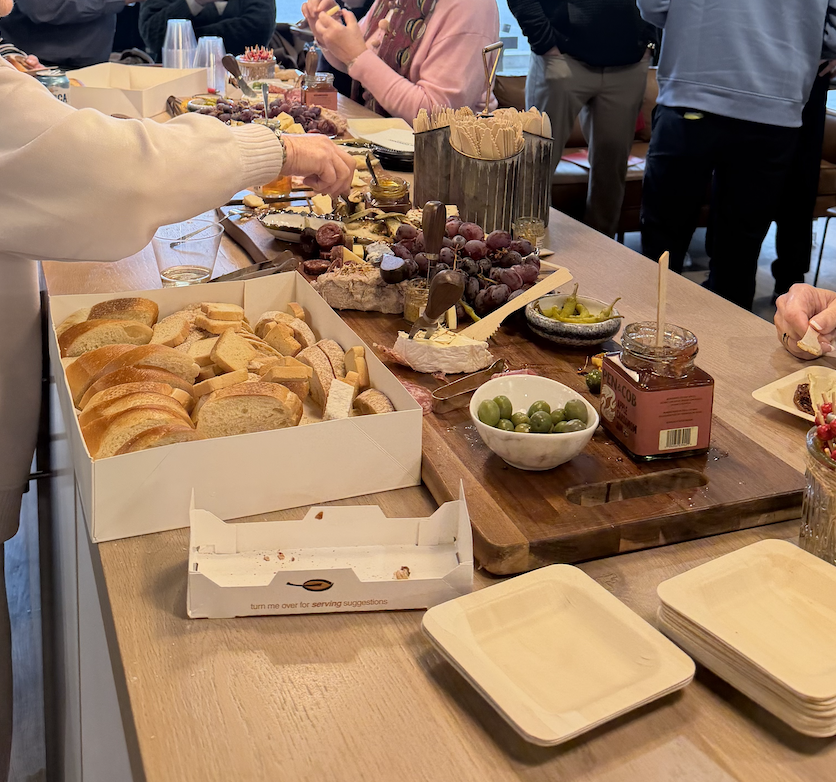
Following the presentation, the conversation continued as agents gathered for charcuterie and refreshments provided by OuterIsles, connecting with colleagues from Jack Conway and other local brokerages.
OuterIsles also provided a closing gift for a special raffle held during the event, adding another memorable element to the afternoon. We appreciate their contribution to the experience.
The event reflected the broader purpose of Jack Conway's Elevate Series, which brings real estate professionals together around relevant topics, professional development and opportunities to learn from one another.
As the industry continues to evolve, educational opportunities like this help create space for agents to explore new ideas, understand emerging technologies and consider how those developments may influence their businesses.
Continuing to Explore What's Next in Real Estate
Artificial intelligence will continue to influence the tools consumers use, the information they encounter and the ways real estate professionals conduct business. Understanding those developments requires ongoing education, curiosity and a willingness to evaluate new ideas thoughtfully.
At Jack Conway, that commitment extends beyond any single course or presentation. Through initiatives such as the Elevate Series and continued exploration of emerging real estate technology, the company remains focused on helping agents stay informed, develop their skills and adapt to a changing industry.
CE & Charcuterie offered a valuable opportunity to bring those conversations into one room, combining practical education with the perspectives and experiences of real estate professionals from across the local community.
Thank you to the more than 70 agents who joined us at our Hanover headquarters for AI Essentials for Real Estate Professionals, and to everyone who contributed to an afternoon of learning, collaboration and conversation.